

A shopper asks whether a backpack fits a 16-inch laptop. The store can lose the sale if the answer takes too long, or win the wrong sale if the assistant guesses. That is the test that matters to a seller: does the assistant make it easier to buy the right product?
We put Amazon Alexa for Shopping first as a retail example and Upsello second as our pick for Shopify stores that want to answer buying questions and follow up on stalled carts. Upsello publishes this guide and makes the second product. Four entries are shopping experiences merchants can learn from or, in some cases, sell through; six are tools merchants can deploy on their own sites. The order is an editorial choice based on public evidence checked through November 10, 2026. We did not run a head-to-head test.
The 10 assistants at a glance
| # | Assistant | Where it works | What it helps shoppers do |
|---|---|---|---|
| 1 | Amazon Alexa for Shopping | Amazon | Compare products and track prices. |
| 2 | Upsello | Shopify storefront | Get answers to product questions and help with stalled carts. |
| 3 | Walmart Sparky | Walmart | Build a shopping basket from a list or meal plan. |
| 4 | Shop by Shopify | Shop marketplace | Find products across brands by describing what they need. |
| 5 | The Home Depot Magic Apron | The Home Depot app | Find project supplies and check local availability. |
| 6 | Rep AI | Merchant storefront | Narrow a broad request to relevant products through chat. |
| 7 | Chatty | Shopify storefront | Compare products and add the chosen variant in one panel. |
| 8 | Gorgias Shopping Assistant | Shopify store using Gorgias | Ask about fit or compatibility and get product recommendations. |
| 9 | iAdvize AI Shopping Assistant | Merchant storefront | Compare options and, when enabled, select a size or color in chat. |
| 10 | Tidio Lyro AI Agent | WooCommerce storefront | Select a variant and add it to the cart from chat. |
1. Amazon Alexa for Shopping (formerly Rufus): Make products easier to discover
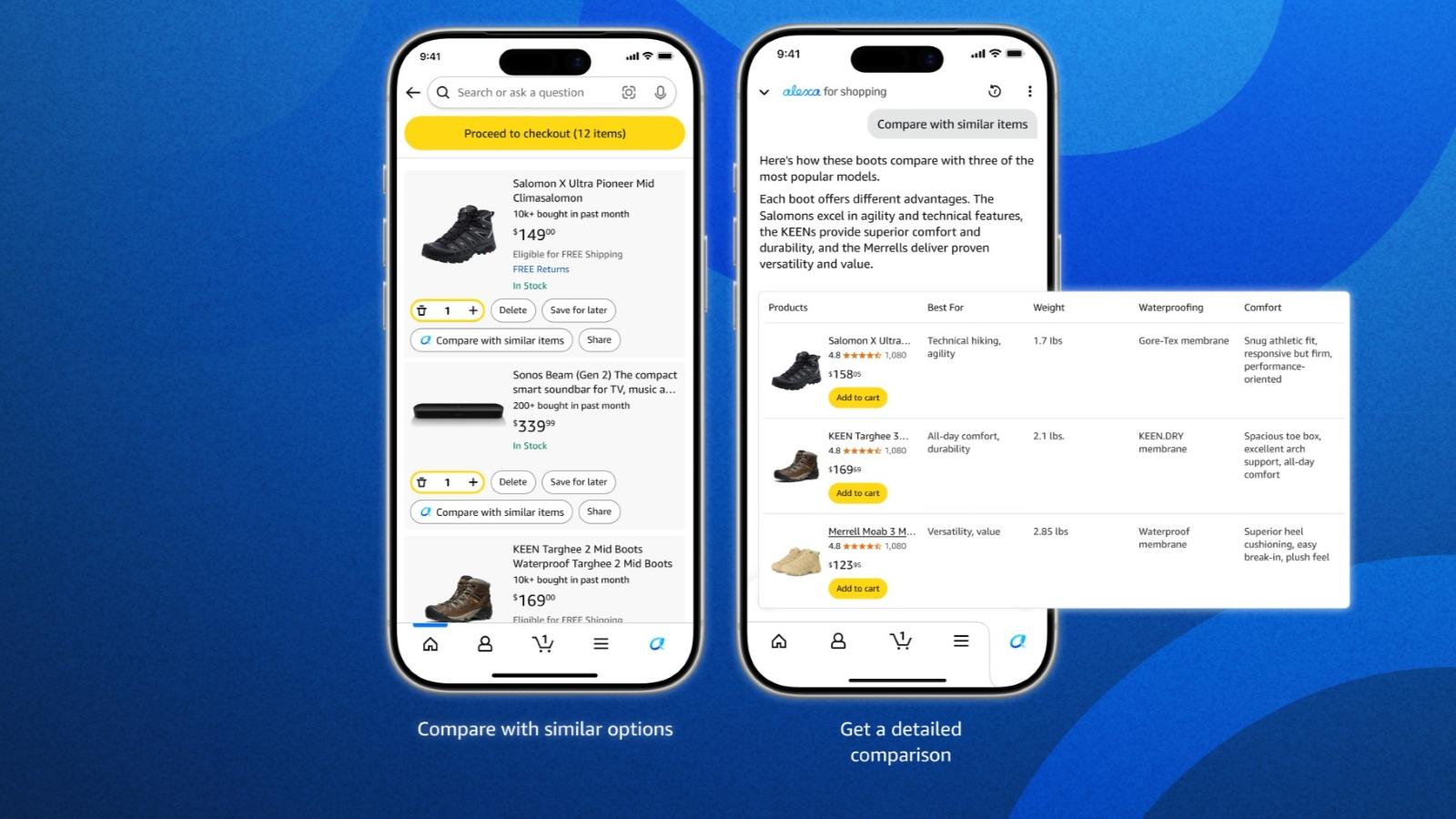
Amazon's shopping assistant compares products, shows price history, and can alert shoppers when a price reaches their target. It was the most used retailer assistant on average among AI users in McKinsey's 11-market survey. In a hands-on review, Amanda Eiden used it to check whether cheaper refills fit a product she already owned. Eligible sellers can submit selected products through Shop Direct for possible discovery in relevant searches. Include model numbers and compatibility details so shoppers can verify the fit.
2. Upsello: Answer the question that stalls the cart
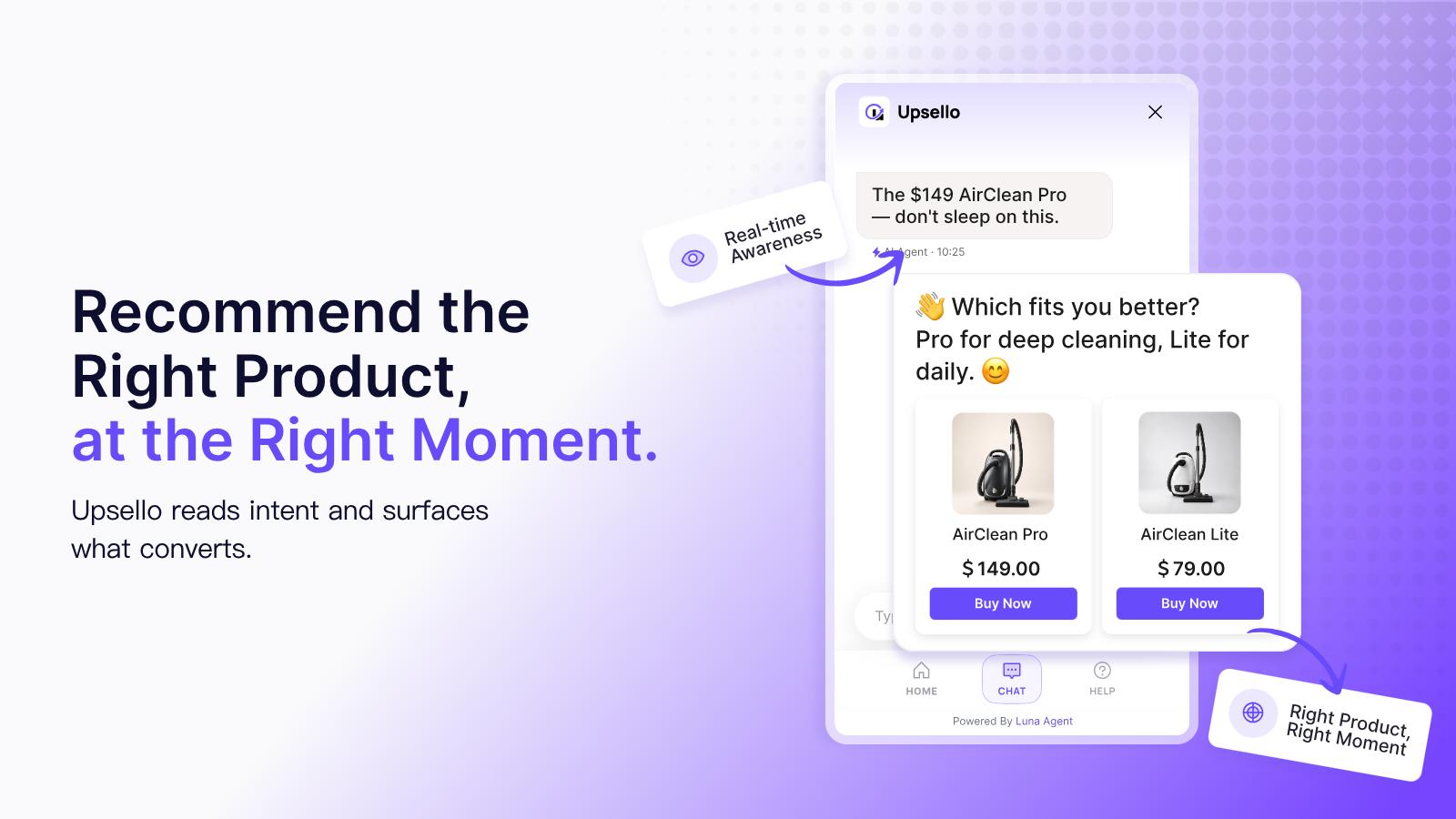
Upsello's Shopify integration uses the store's catalog and policies to answer buying questions, recommend products, and hand off to a person when needed. Merchants with cart recovery enabled can preview the message on a sample cart before shoppers see it. Use the follow-up to address what blocked the order, such as whether an accessory is included, before adding an offer. In Upsello's Shopify listing, Kalodiy reported better efficiency and average order value after 18 days of use. It was the only public review listed when we checked and gave no figures or baseline.
3. Walmart Sparky: Turn an entire shopping list into a basket
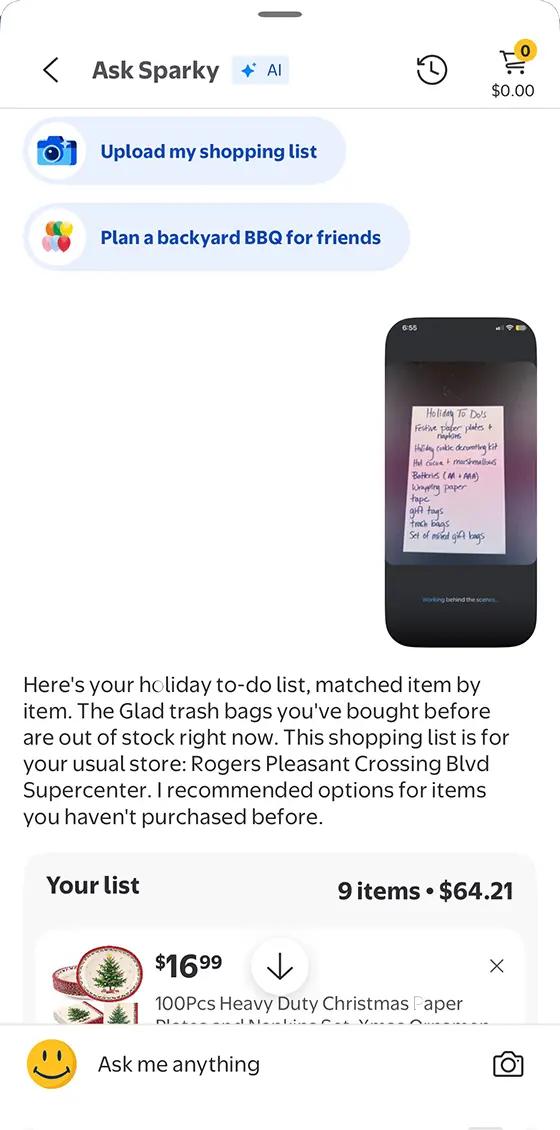
Sparky can read a photo of a handwritten list and build a Walmart cart, or suggest a meal and add the ingredients. Shoppers can review a single basket instead of searching for every item. For sellers, the idea to borrow is to help customers buy everything they need for a task, with quantities and pack sizes they can check. Walmart reported that Sparky users spent 40% more per order than nonusers. The comparison does not show how much of that difference Sparky caused.
4. Shop by Shopify: Get discovered through the words shoppers use
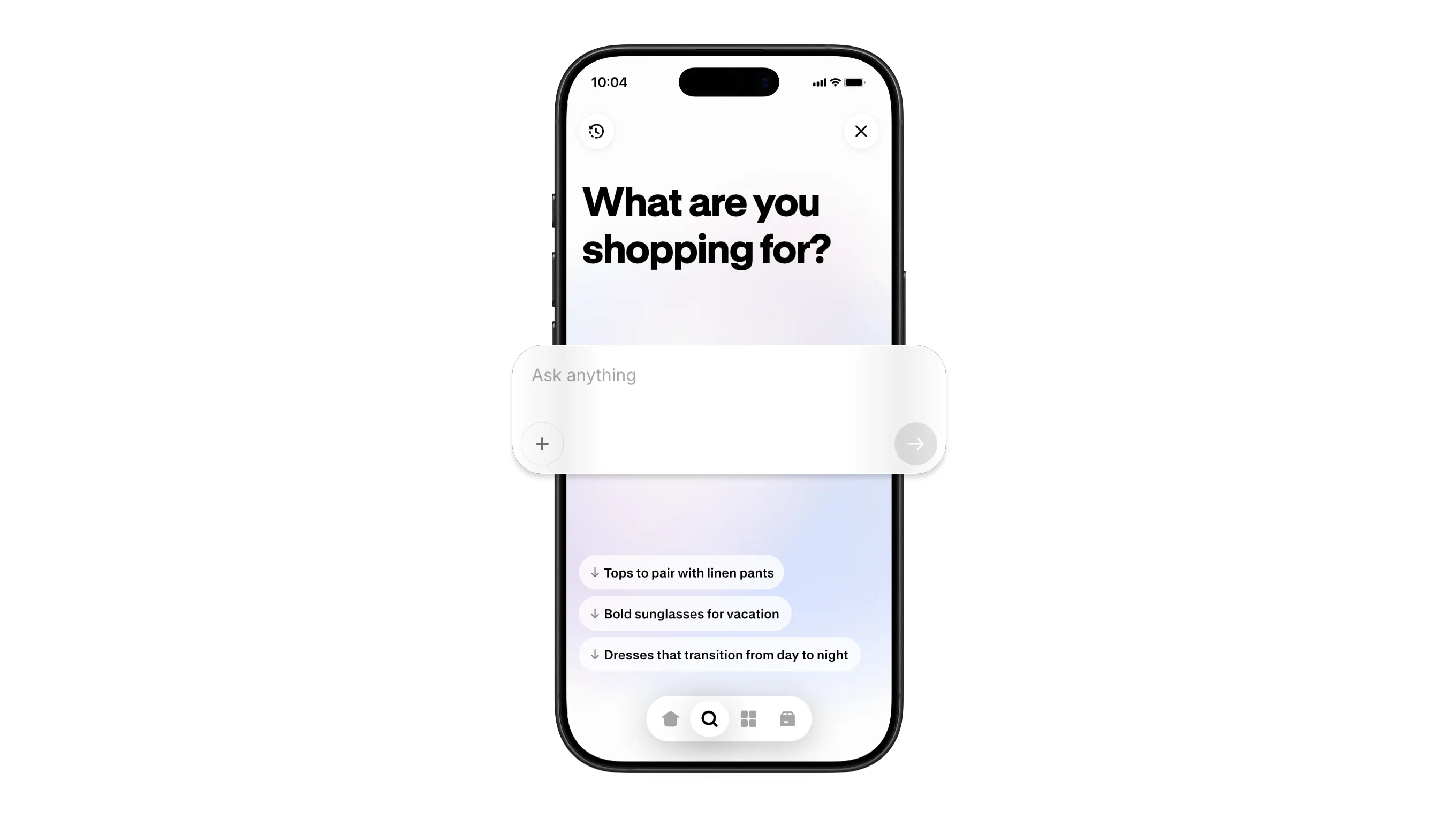
Shop's conversational search lets a customer describe a gift or a product need in plain language and filters results to stores that ship to their location. Shopify says detailed product descriptions can help match those requests. Spell out fit, material, and use in your listings. Shop analytics shows product impressions in Shop, sales made there, and sales referred to your site. Those channel totals do not isolate the assistant's contribution.
5. The Home Depot Magic Apron: Connect advice to products available nearby

Magic Apron suggests tools and supplies for home projects. In Store Mode, shoppers can check availability and locate an item's aisle and bay in their selected store. Home Depot says shoppers in its pilot reported finding products more easily. For a retailer, the useful pattern is to link the project advice to the stock a shopper can act on. A list of materials is more useful when the customer can see what's available at their chosen store.
6. Rep AI: Ask a question that narrows the catalog
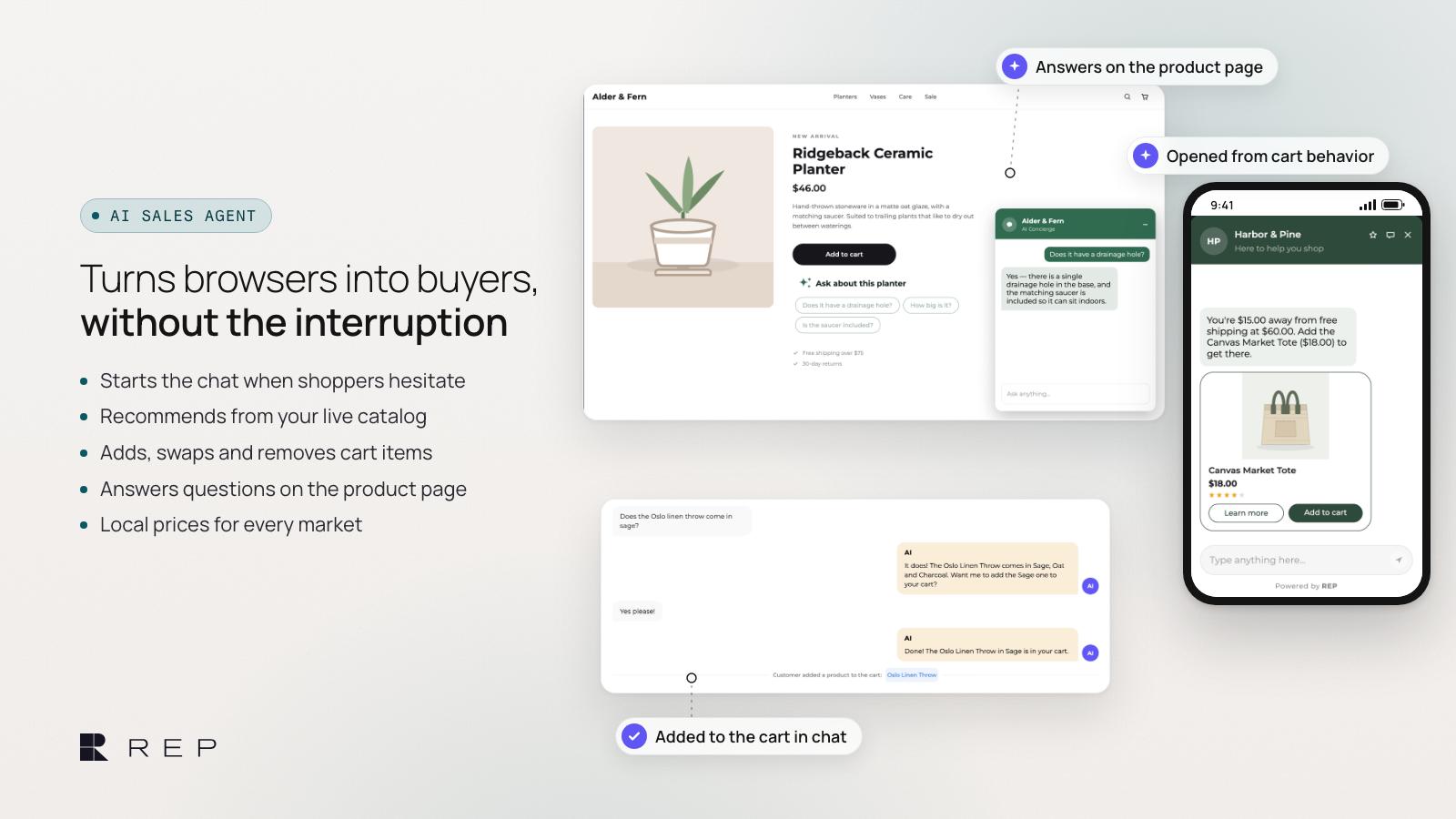
Rep AI's Product Finder can ask a follow-up about a broad request or show a named product when merchant instructions call for it. That makes it useful when customers know what they need the item to do but cannot name the right model. In an October 2026 Shopify review, Shilav described Rep answering sizing and product questions in Hebrew and English. A merchant can check whether this kind of conversation gets shoppers from a vague request to the right product page.
7. Chatty: Let shoppers compare and add products in one panel
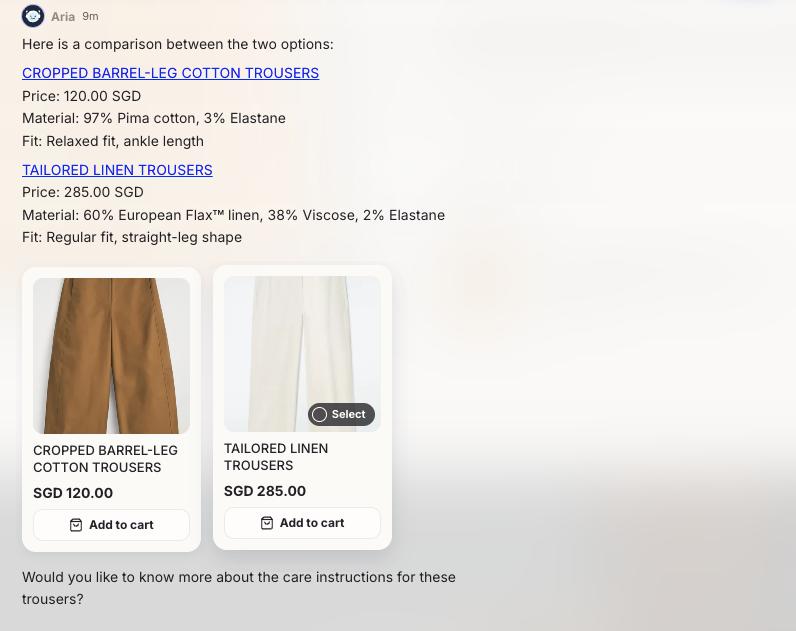
Chatty's storefront mode puts catalog search, comparisons, variant details, and the shopping bag in one panel. A customer can compare options and add a selection without reopening each product page. If you deploy it, check whether shoppers can add the variant they chose. In a vendor case study, Chatty tagged 1,092 HIKOCO orders as assisted from November 18, 2025, through September 30, 2026. The tag means a chat took place in the seven days before purchase. The case does not isolate the panel's effect or establish how many orders were incremental.
8. Gorgias Shopping Assistant: Bring selling into the support conversation
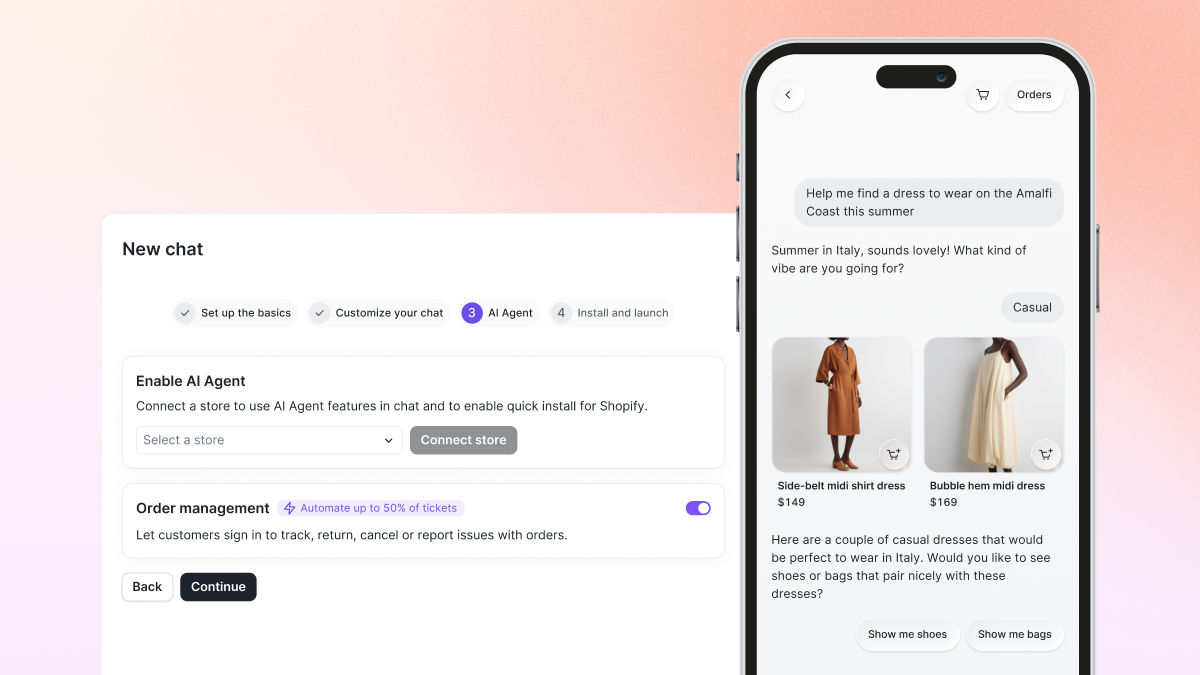
For stores already using Gorgias, its Shopping Assistant can answer pre-purchase questions and suggest items using the connected Shopify catalog, browsing activity, and cart. A customer who asks about fit or compatibility can get help choosing an item in the same conversation. In a July 2026 Shopify review, Unagi said the assistant helped a customer buy an accessory. That is one reported purchase, useful as an example of the workflow.
9. iAdvize AI Shopping Assistant: Make detailed product choices easier
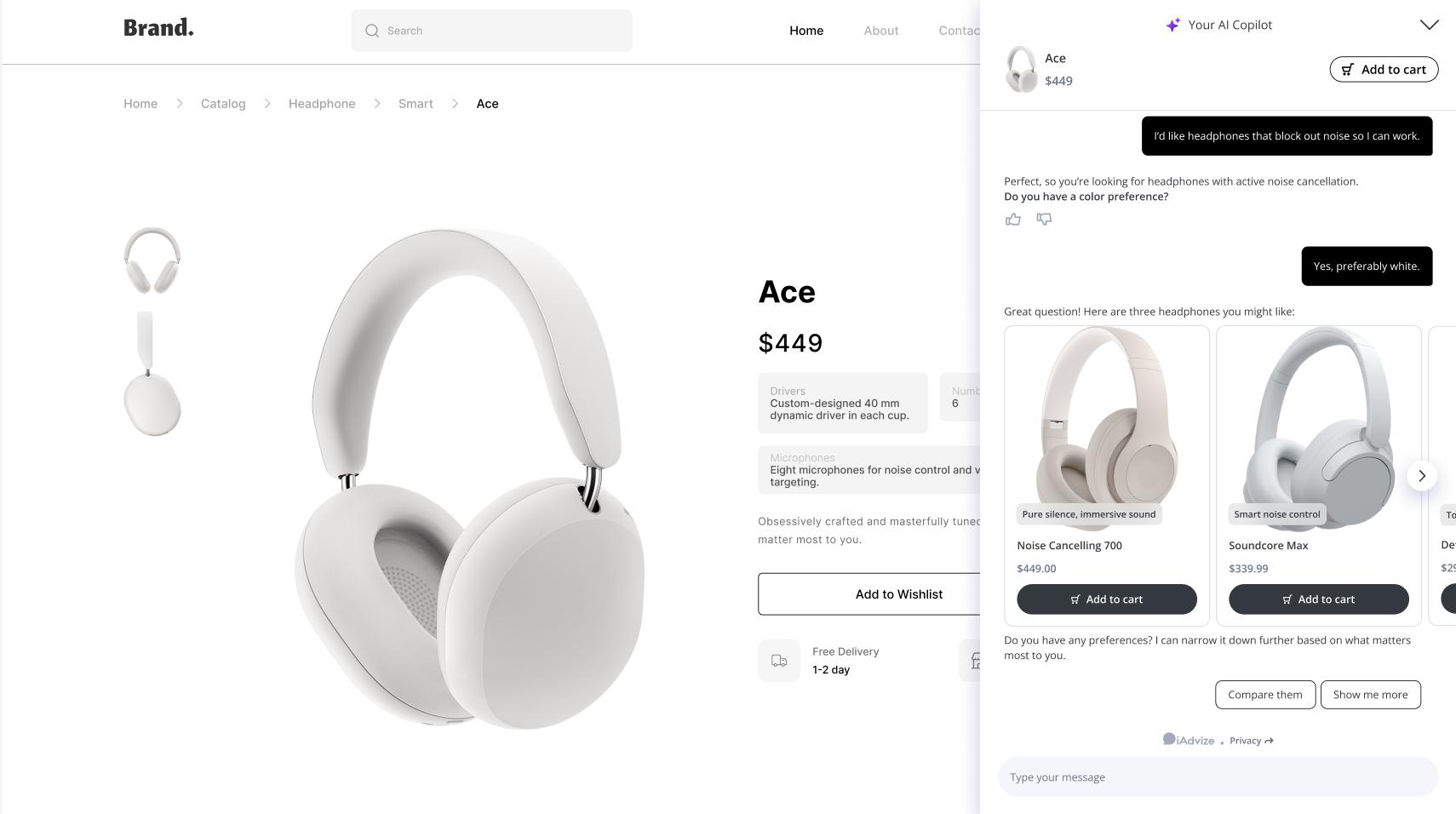
iAdvize can ask about a shopper's budget or requirements, compare products, and, when configured, let shoppers select a size or color and add it to the cart from the conversation. The seller's opportunity is to make a large catalog usable without making customers learn its filters. In an August 2026 Shopify review, Bathify.ca described using the assistant to surface alternatives and complementary items during a chat. Ask whether each suggestion solves the shopper's problem before measuring basket size.
10. Tidio Lyro AI Agent: Help WooCommerce shoppers choose and add the right variant
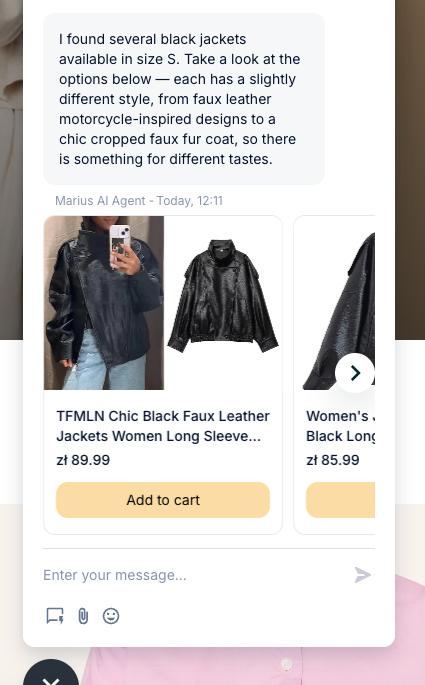
Tidio's WooCommerce integration lets an active Lyro agent recommend products from a synced catalog. When merchants enable add-to-cart on product cards, shoppers can choose an available size or color and add it without leaving the chat. This gives a shopper who has decided on an item a direct path to the right variant. HBA Salon Equipment highlighted product recommendations in an August 2026 Shopify review of Tidio. That review covers Shopify; on WooCommerce, use Tidio's product-answer preview and check that the correct variant reaches the cart before launch.
Measure the sale you might otherwise have lost
For an assistant you deploy on your own site, start with one problem you can observe. If backpack shoppers keep asking about fit, test whether the assistant checks the laptop sleeve dimensions for the exact model and offers a suitable alternative when it cannot confirm a match. If they already found the right bag but leave after asking about returns, fix that answer before trying a discount.
Once the answers are sound, compare randomly assigned eligible visitors with and without the feature. Track sales after discounts and refunds per eligible visitor, including people who never open chat. Also track whether shoppers reach the right variant and whether returns rise. That tells you more about the value to your store and its customers than the number of orders tagged as assisted.


