
 Language

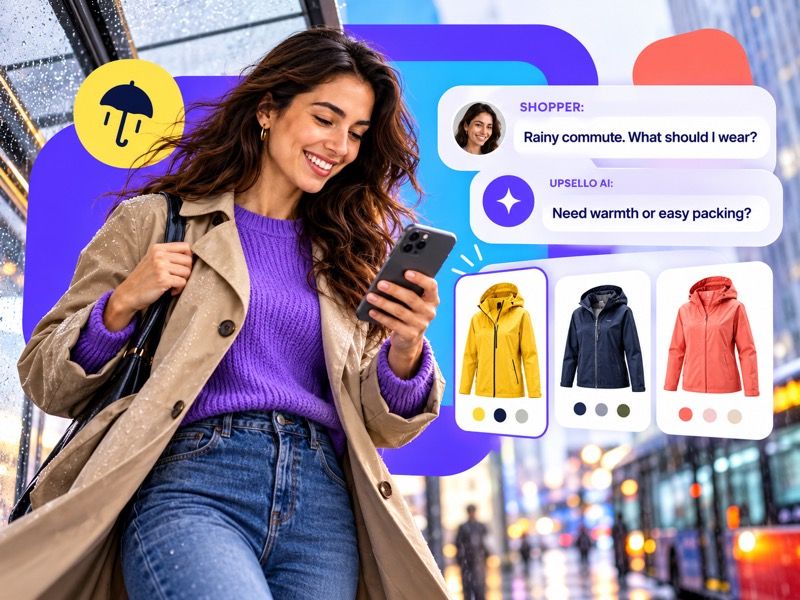
A shopper asks, “Which jacket works for a rainy commute?” One bot points to a help article. Another asks whether warmth or packability matters more, checks the available products, and explains a suitable option. Both are chat interfaces. They are doing different jobs.
That is the useful distinction for a Shopify team evaluating software. The question is not whether a vendor calls its tool a chatbot, assistant, or agent. The question is what the tool can responsibly accomplish between a shopper's uncertainty and a purchase decision.
Start with the job, not the label
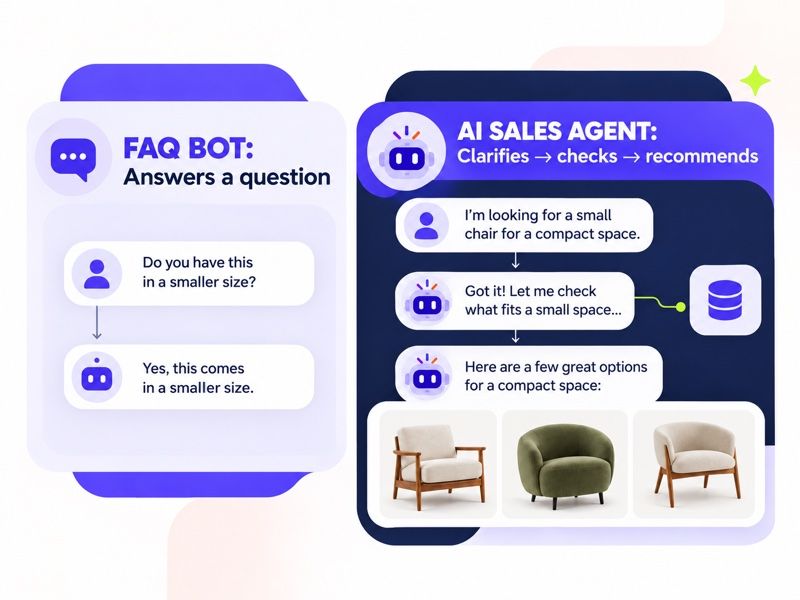
Shopify's virtual shopping assistant guide distinguishes traditional FAQ-oriented chatbots from assistants that support product discovery and decision-making. Its AI personal shopper guide makes a similar distinction: conversational tools can interpret intent, ask follow-up questions, and adapt guidance. These are category descriptions, not a guarantee that every product sold under either label can do the work.
For a merchant, a support chatbot can be valuable when the dominant need is repeatable information: return windows, contact hours, or where to find an order. A shopping assistant becomes relevant when shoppers have to choose. They may know the occasion but not the product, compare two similar items, or hesitate over fit, delivery, or cost.
Upsello's existing guide to how AI shopping assistants work explains the underlying flow. This article is a buying test: which workflow do your shoppers actually need?
Six questions to ask in a product evaluation
- Can it clarify intent? Test a vague request such as “I need a gift for a runner.” A useful assistant should ask one discriminating question, not launch a long quiz or list the entire catalog.
- Can it inspect current store truth? A recommendation is only useful if relevant variants, availability, product attributes, and applicable policies are current. Ask the vendor what data it reads, how often it refreshes, and what happens when a field is missing.
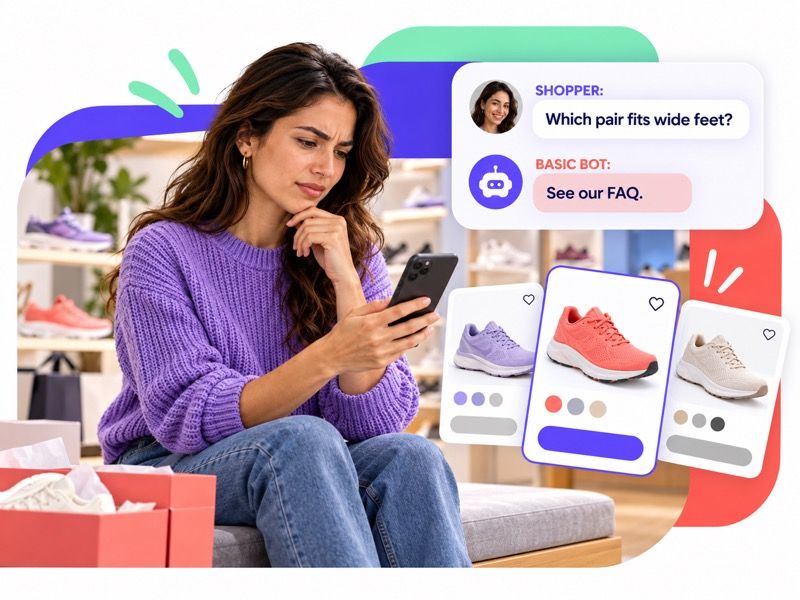
- Can it explain the fit? A shortlist should connect each option to the shopper's stated constraints. “Best seller” is not an answer to “Which one fits wide feet?”
- Can the merchant control promises? Discounts, shipping guarantees, compatibility claims, and policy exceptions should come from approved sources and permissions. The assistant must not invent a better offer to sound helpful.
- Does it know when to stop? If delivery timing cannot be confirmed or a case requires an exception, the next step should be an honest answer and a human handoff with context.
- Can you measure outcomes beyond message count? Look for a coherent path from eligible visit to useful interaction, product consideration, cart, order, and later returns or support contacts.
Where Upsello fits
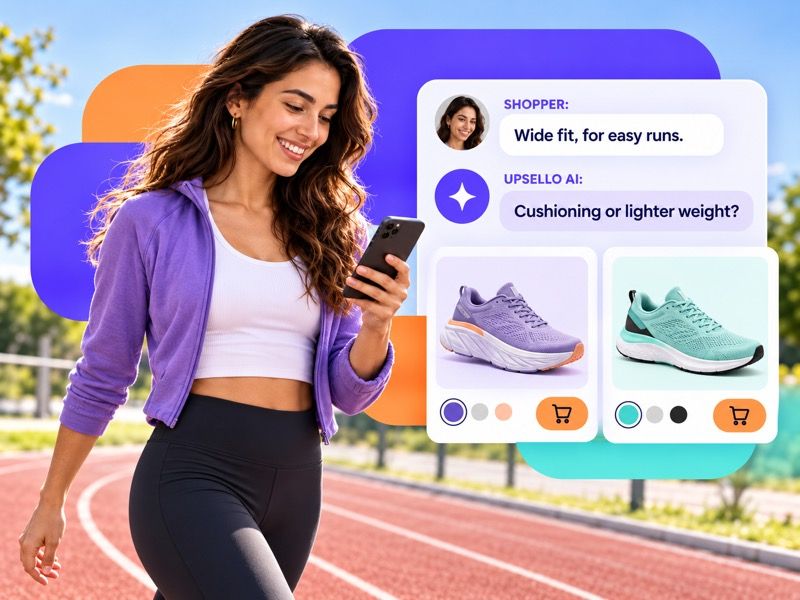
Upsello is positioned as a Shopify AI Sales Agent: it connects conversational product guidance with proactive selling moments, cart support, and customer-service handoff. The scope matters. A store that only needs a low-volume FAQ tool may not need a sales-oriented workflow. A store whose buyers repeatedly ask which item fits, whether a bundle makes sense, or what will happen at checkout should evaluate that broader job.
Our AI shopping assistant capabilities overview shows the discovery-to-conversion path. Our merchant buying guide gives a broader selection framework. In a demo, use your own products and policies: the best test is whether the assistant gives a correct, useful answer when the catalog is messy and the shopper is undecided.
Takeaway: Buy the workflow you need, not the category label. Ask it a real shopper question. Check the evidence behind the answer. Then see whether the shopper has a sensible next step.
CTA: Talk with the Upsello team about a Shopify shopping journey you want to improve.


