
 Language

Most product questions are not really requests for more products. They are requests for help deciding. “I need a jacket for my commute” leaves out the crucial constraints: climate, packability, budget, fit, and whether the shopper already owns a similar item.
Guided selling turns that uncertainty into a short decision process. A good AI sales agent asks the next useful question, checks the store's actual options, and explains why a product fits. It does not confuse a longer conversation with a better one.
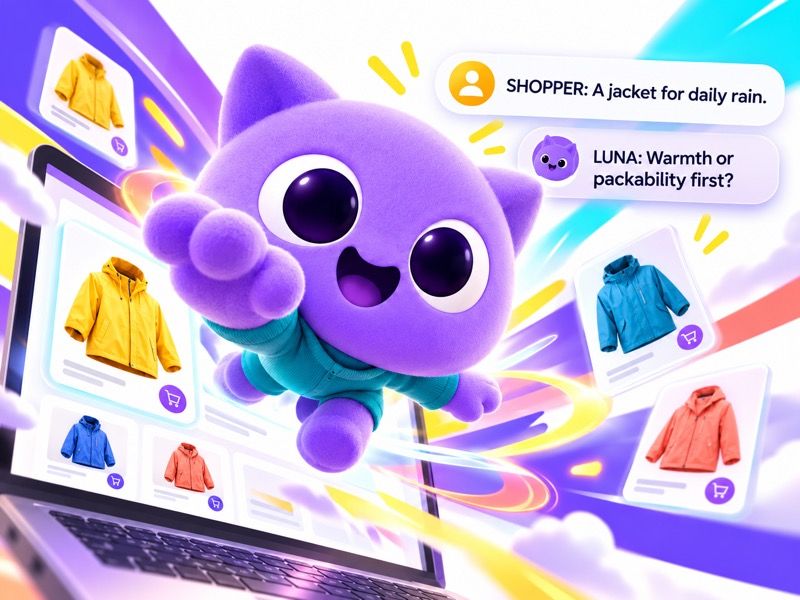
The four moves of a useful guided-selling conversation
1. Find the job to be done. “What are you using it for?” is often more useful than “What color?” The answer narrows the product category and the attributes that matter. Shopify describes this consultative role in its AI personal shopper overview.
2. Ask one question that changes the shortlist. For a rain jacket, warmth versus packability may be decisive. For skincare, sensitivity may be more important than a general “skin type” label. If a question would not change the recommendation, skip it.
3. Check hard constraints. Price ceiling, variant availability, dimensions, material, and shipping eligibility are not conversational decoration. The agent should verify them before presenting an option. If the catalog lacks an attribute, it should say what is unknown.
4. Explain the trade-off and invite a next step. “This is lighter and packs smaller; the other has a warmer lining” is more helpful than “This is the best one.” The shopper may choose the lower-priced item. Better fit can be the right sales outcome even when it is not the highest immediate basket value.
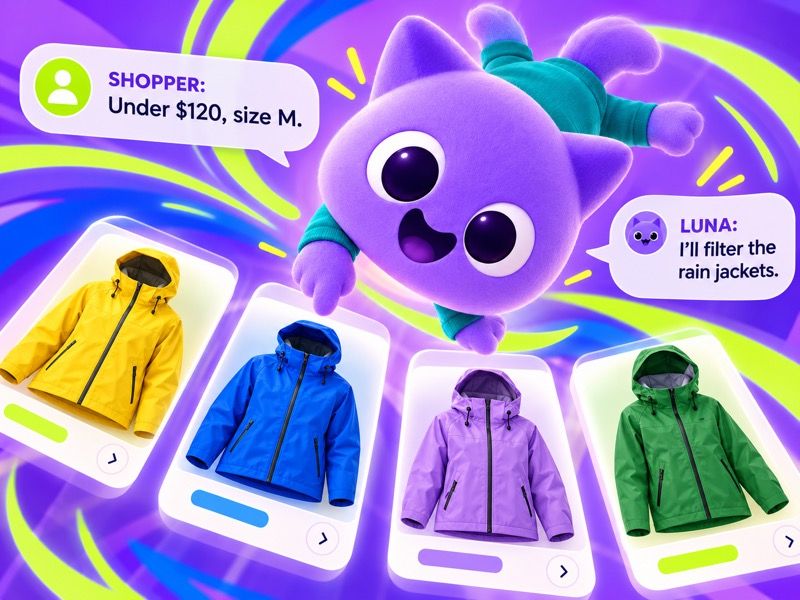
When guidance should appear
An explicit shopper question is the cleanest signal. Repeated comparison of similar products, revisiting a size guide, or browsing a complex category may also justify a modest prompt when merchant settings and privacy choices allow it. A first-time visitor glancing at the homepage rarely needs a full-screen interruption.
Upsello's article on eight proactive selling moments maps moments where a sales conversation can help. For a shopper who has already narrowed the options, our AI product comparison guide goes deeper on explaining meaningful differences. Guided selling sits earlier: it helps build the shortlist in the first place.
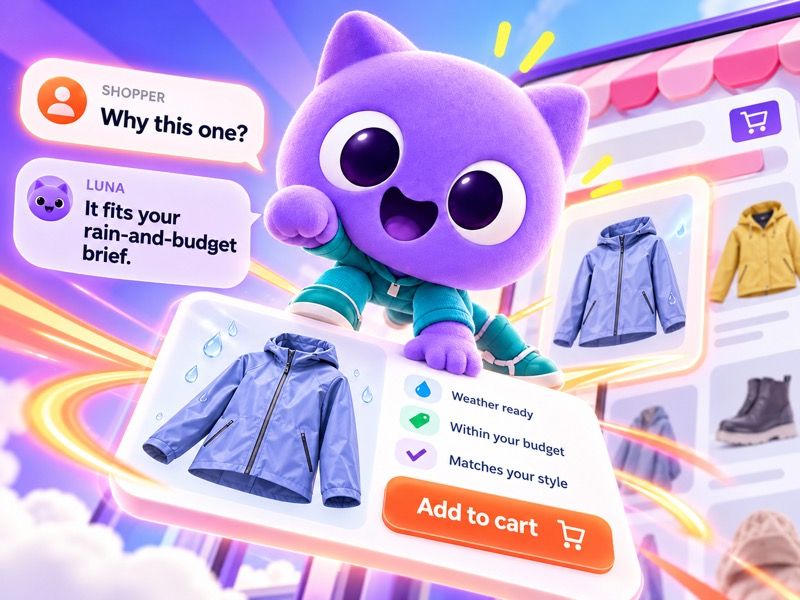

A merchant setup checklist
Start with a category where shoppers routinely ask “Which one?” Define the three or four attributes that genuinely drive fit. Check that product pages contain complete, consistent values for those attributes. Give the agent approved policy and promotion rules. Review sample conversations for relevance, factual accuracy, tone, and avoidable interruptions.
Then evaluate the downstream journey. A useful interaction may result in a product page view, a saved shortlist, a cart, a purchase, or a well-contextualized handoff. Do not count a chat that delivered a weak recommendation as a success just because the shopper replied.
Shopify's AI personalization guide emphasizes data quality as a prerequisite for useful personalization. The same applies here: the quality of the question is important, but the quality of the catalog determines whether the answer can be trusted.
Takeaway: Guided selling is not about asking more. It is about identifying the smallest set of facts needed to make a better-fit recommendation.
CTA: Explore Upsello's shopping-assistant capabilities or request a conversation about your highest-friction category.


