

An AI sales agent can produce thousands of conversations and still leave the most important question unanswered: did it help shoppers make better decisions and create incremental business value?
Chat volume is an activity measure. It says little about relevance, recommendation quality, or what would have happened without the message. A Shopify team needs a measurement chain that connects the intervention to a useful customer outcome—and checks the cost of getting there.
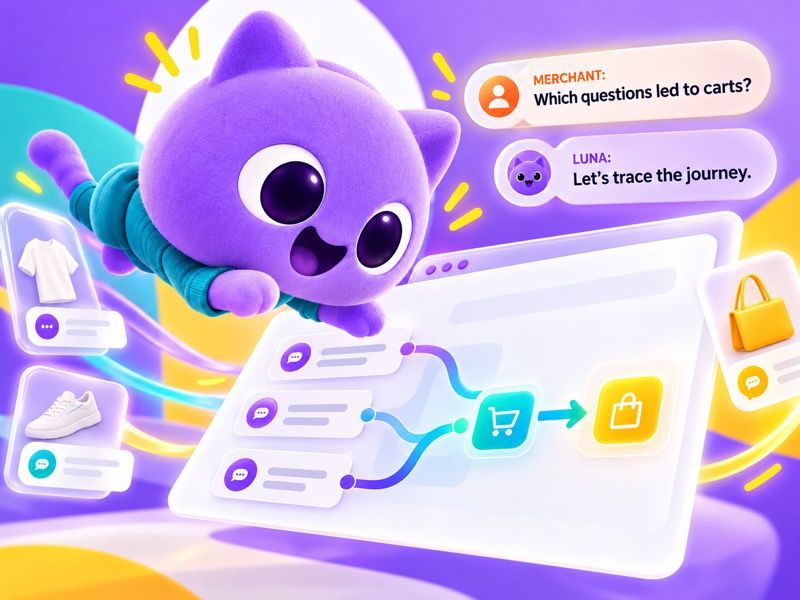
Define the eligible population first
For each scenario, specify who could have received assistance. A comparison prompt might be eligible only for shoppers who viewed two related products. A checkout rescue prompt might require a meaningful hesitation signal. Without an eligible denominator, “conversion among people who chatted” is hard to interpret: the most interested shoppers may have been more likely to chat anyway.
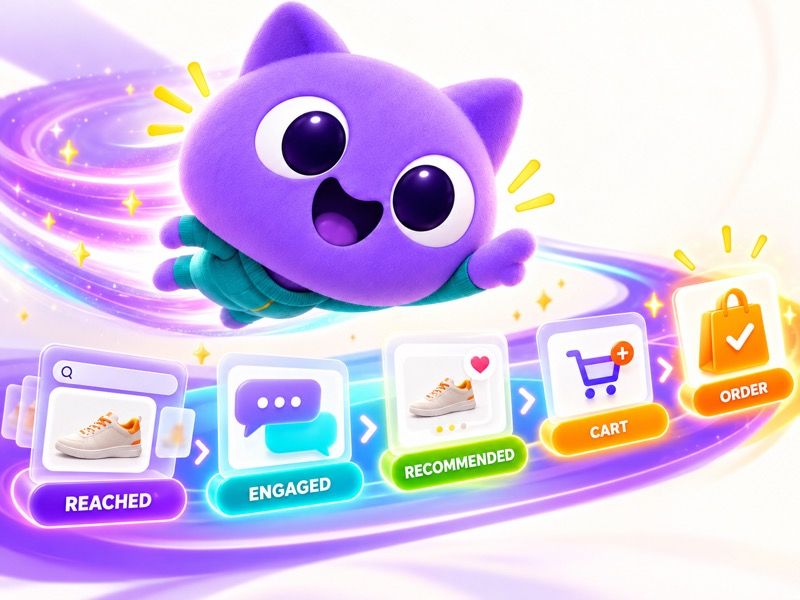
Then instrument the journey: eligible visit → prompt shown → prompt accepted or dismissed → question understood → recommendation or answer delivered → product view → add to cart → checkout → order. Keep subsequent cancellation, return, refund, and repeat support contact in view. Upsello's article on eight proactive selling moments supplies distinct starting points for this measurement. Product and order stages can use GA4’s recommended ecommerce events; record AI-prompt eligibility and response events separately.
Separate three types of outcomes
Experience quality: Was the response factually correct? Was the recommended item relevant and available? Did the AI answer the actual question? Was the shopper interrupted too often?
Commerce behavior: Did the shopper inspect a product, add to cart, resume checkout, or order? These events show movement, but they do not by themselves prove the AI caused it.
Business quality: What happened after the order? Consider discount cost, contribution margin, returns, cancellations, support contacts, and repeat purchase where the observation window permits. A high order count bought with indiscriminate discounts can be a weak result.
Shopify's checkout optimization guide recommends monitoring checkout performance and experimenting across segments. Its AI personalization guide likewise advises selecting a use case and tracking outcomes such as order value and repeat purchase. The point is not to borrow someone else's benchmark; it is to build a defensible baseline for your own store.
Use a comparison group when you can
If an eligible holdout is feasible, randomly assign eligible shoppers to AI assistance or a holdout, then compare them over the same period with the same promotion rules. Track the incremental change, not just orders that occurred after an AI interaction. If a holdout is not possible, be explicit about the limitation. Report “assisted orders” as a descriptive association, not as proven incremental revenue.
Review results by use case. Guided selling, checkout rescue, and post-abandonment follow-up operate at different stages and should not be blended into one rate. Segment by device, new versus returning shoppers, category, and traffic source only when sample sizes and privacy practices support a fair comparison.
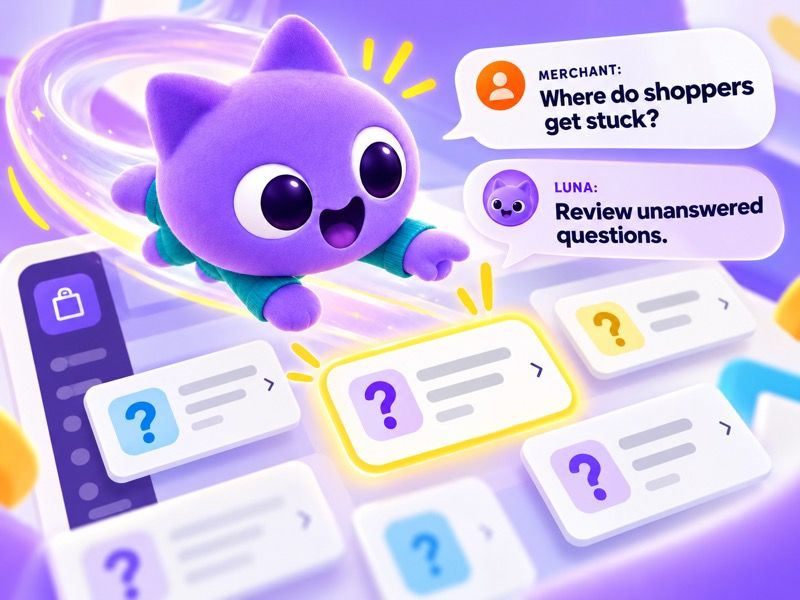
Finally, read conversations. A dashboard cannot tell you every reason shoppers did not proceed. Unanswered fit questions may suggest missing catalog fields; many delivery escalations may reveal unclear policy; repeated discounts may suggest poor offer controls. Measurement should improve the store, not just decorate a report.
Upsello's chatbot ROI guide provides a broader financial lens. The shopping assistant capabilities overview describes the product journey that the metrics should reflect.
Takeaway: Measure the whole decision path and the quality of the outcome. More chats are not the goal; more useful, trustworthy shopping decisions are.
CTA: Talk with Upsello about which AI-assisted shopping outcomes matter to your store.


