
 Language

“Will this bag hold a 15-inch laptop?” A confident answer is easy to generate. A reliable answer requires a verified compartment dimension, not a guess from a product photo.
For a Shopify AI Sales Agent, product knowledge is operational knowledge. Titles and descriptions matter, but so do variant-level attributes, inventory, pricing, delivery conditions, return rules, and merchant-approved claims. The agent's fluency should never outrun the quality of those sources.
Build a source hierarchy
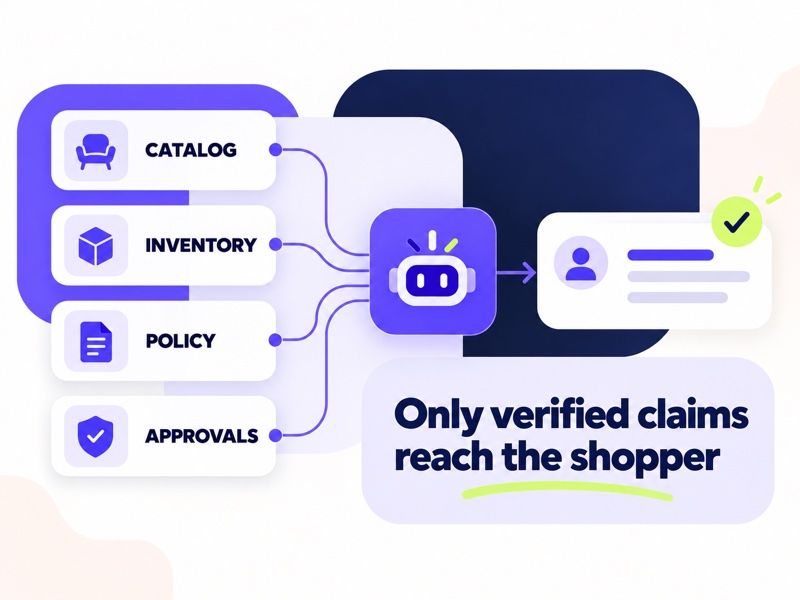
Product and variant facts: Name, dimensions, material, fit notes, compatibility, color, size, and care instructions. Prefer structured, variant-specific fields when a claim differs by SKU.
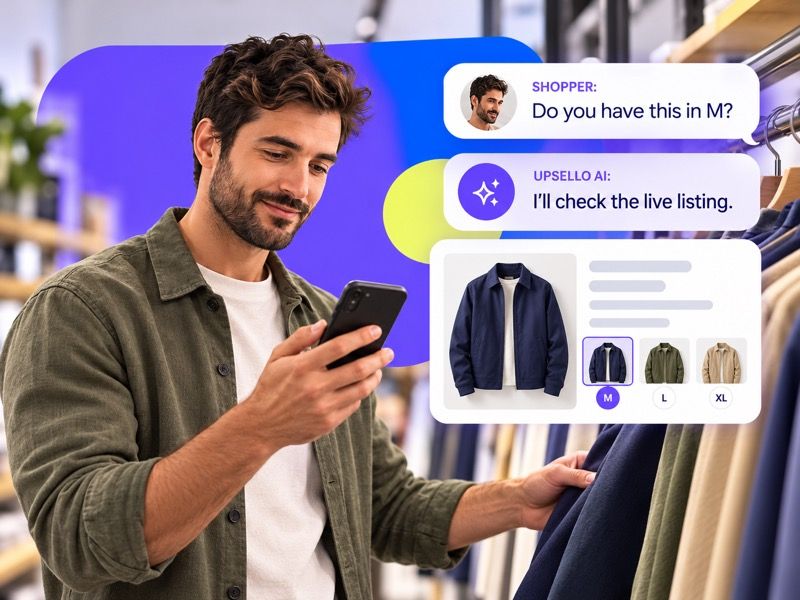
Current commerce state: Price, availability, eligible shipping methods, and applicable promotion rules. These can change quickly. State a fact only when the system can retrieve it at the right moment.
Store policy: Returns, exchanges, warranty, delivery areas, and exceptions. Policies should be written so both a person and an agent can identify the rule and the conditions that change it.
Approved selling language: Claims such as “waterproof,” “hypoallergenic,” or “fits most laptops” need explicit substantiation. A marketing slogan is not a substitute for a product specification.
Shopify's AI personal shopper guide recommends specific product descriptions and structured data for AI discovery. Its virtual assistant guide also describes how product and business information support contextual responses. Those principles apply to a brand's own storefront assistant as well as external AI discovery.

What to do when sources disagree
Decide which source wins before launch. For example, a live variant availability check should outrank an old marketing page. A merchant-approved return policy should outrank a conversational example from last season. Record who owns each source, when it was last updated, and what the agent should say when the answer is missing.
A useful fallback is specific: “I can confirm the bag's outer dimensions, but I can't verify the laptop compartment width. Let me ask the team.” That response protects the shopper and gives staff a precise task. An unsupported “Yes, it should fit” may create a return, a support ticket, and a loss of trust.

Audit the catalog before adding more prompts
Choose a representative sample: one best seller, one item with variants, one seasonal item, one product with complex fit or compatibility, and one with a current promotion. Ask the agent questions a shopper would ask. Check whether every recommendation names its relevant evidence, respects availability, and avoids unapproved claims.
Upsello's capabilities guide covers how shopping assistance spans discovery and conversion. The technical walkthrough explains how an assistant can use store knowledge in a conversation. This checklist is the merchant's responsibility behind both: keep the source of truth fit for selling.
Takeaway: The answer to “Can the AI recommend our products?” begins with a quieter question: “Can our own team locate the exact fact behind this recommendation?”
CTA: Talk with Upsello about which catalog and policy sources your Shopify agent should use.


